


What Really Works and What’s Safe?
Thinking about whitening your teeth but not sure what actually works – or what’s safe? This guide explains how modern teeth whitening works, the difference between in-clinic and at-home options, what the research says about safety, and when whitening is appropriate for adults, teenagers, and children.
What is teeth whitening?
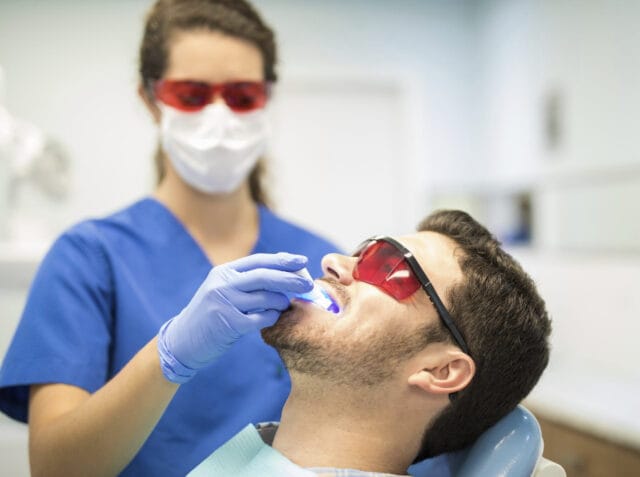
Teeth whitening (or tooth bleaching) is any treatment that lightens the natural colour of your teeth. Most professional and over-the-counter systems use peroxide-based gels: hydrogen peroxide or carbamide peroxide. These gels penetrate the enamel and dentin and break large stain molecules into smaller, less pigmented fragments, so the teeth appear lighter.
Whitening can improve surface stains from coffee, tea, red wine and tobacco, and many age-related or internal stains. However, it only works on natural teeth – it does not change the colour of fillings, crowns, veneers, or bridges.
Main types of teeth whitening
1. In-office professional whitening
In-office whitening is carried out by a dentist in the clinic. It uses higher concentrations of peroxide gels, with careful protection of the gums and soft tissues. Treatment is usually delivered in one to three sessions of 30–60 minutes. It provides rapid results and is ideal when you want to see a visible change quickly.
Clinical trials and recent reviews show in-office whitening is effective and provides stable shade change over time, especially when followed by at-home “top-up” treatments.
2. Dentist-supervised at-home whitening
At-home, dentist-supervised whitening (tray whitening) uses custom-made trays and a lower-concentration peroxide gel, typically 10–22% carbamide peroxide. The trays are worn for a few hours per day or overnight for one to three weeks, depending on the protocol and patient sensitivity.
Systematic reviews and randomised clinical trials show that properly used at-home tray systems can achieve shade changes comparable to in-office whitening, often with good long-term stability of the result.
3. Over-the-counter (OTC) whitening
Over-the-counter products include whitening strips, paint-on gels and pens, generic trays with gel, LED “kits”, and whitening toothpastes or mouthrinses. These typically contain lower peroxide concentrations than professional products, and the fit of trays or strips is more variable.
Research suggests that while some OTC products can lighten teeth, dentist-supervised tray whitening and in-office whitening tend to give stronger, more predictable and more stable results.
Is teeth whitening safe?
When used as directed and ideally under dental supervision, peroxide-based whitening is considered safe and effective by major professional organisations such as the American Dental Association. The key is to use evidence-based products and follow manufacturer and professional protocols.
Like any treatment, whitening can have side effects, particularly if overused or done without proper assessment.
Common, usually temporary side effects
• Tooth sensitivity – often a short, sharp discomfort to cold during or shortly after treatment.
• Gum or soft-tissue irritation – if gel comes into contact with the gums, lips, or cheeks.These effects are usually mild and reversible. They typically settle when treatment is paused, the wearing time is reduced, or a desensitising toothpaste or gel is used.
Less common concerns
Laboratory studies show that aggressive or excessive use of high-concentration bleaching gels can cause temporary changes in enamel surface hardness or roughness. In routine clinical use, with appropriate protocols, these changes are generally minimised and can be offset by saliva, fluoride and remineralising products.
Internal bleaching of root-treated teeth is a different procedure and must be carefully planned to avoid complications such as external cervical resorption.
Why a dental exam matters before whitening
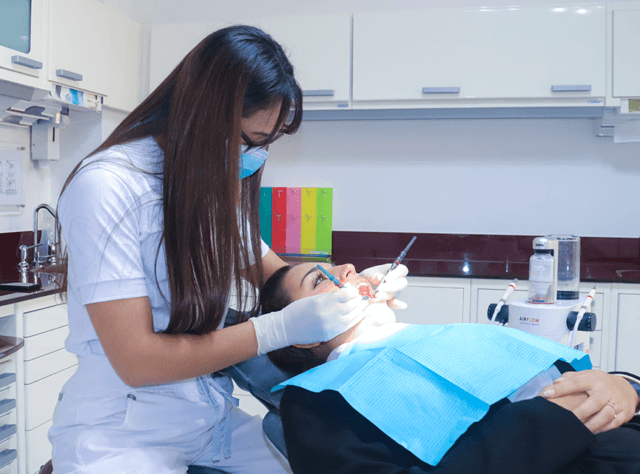
A comprehensive examination before whitening is essential. Your dentist can:
• Check for decay, cracks, leaky fillings, gum disease or exposed roots that may increase sensitivity.
• Diagnose the true cause of the discolouration (for example trauma, fluorosis, medication, or ageing).
• Decide whether bleaching is suitable, or if other options such as composite bonding or veneers are more appropriate.
• Plan any future replacement of visible fillings or crowns so they match the new tooth shade.
Teeth whitening for children and teenagers
Interest in whitening among children and adolescents has increased. Professional bodies such as the American Academy of Pediatric Dentistry (AAPD) support the use of bleaching for young patients when it is part of an individualised treatment plan and based on research and best practice.
Key principles include:
• Bleaching for children and teenagers should always be dentist-directed, not do-it-yourself or mall-kiosk whitening.
• The underlying cause of discolouration should be identified and treated first.
• Conservative protocols, lower concentrations and careful monitoring should be used.
• Full-arch cosmetic bleaching is usually avoided in the mixed dentition stage to prevent long-term shade mismatch.
If a child or teen is asking for teeth whitening, the dentist will assess oral health and enamel maturity, discuss realistic expectations and alternatives, and involve parents in a clear consent process.
How long do whitening results last?
There is no truly permanent whitening. Over time, teeth naturally pick up new stains from food, drinks and habits. Systematic reviews of home tray bleaching with low-concentration products show that most patients maintain a satisfactory shade for many months, although some relapse is expected after 6–12 months, mainly due to lifestyle factors.
Short “top-up” treatments with trays and gel can restore brightness when needed.
You can help results last longer by:
• Limiting very dark, staining drinks such as coffee, tea, red wine and cola, or using a straw.
• Avoiding tobacco.
• Maintaining excellent daily oral hygiene and having regular professional cleaning.
• Using whitening toothpaste occasionally to help control surface stains (these do not bleach, but they help remove new stains).
Who is (and isn’t) a good candidate?
Generally good candidates
• Adults with healthy teeth and gums who want a lighter shade.
• People with yellow or brown staining from food, drinks or smoking.
• Patients with age-related darkening of teeth.
Situations where whitening may not be ideal
• Untreated cavities, gum disease or severe enamel wear.
• Teeth with large cracks or areas of exposed root.
• Smiles with many visible crowns, veneers or large fillings that will not change colour.
• Pregnancy or breastfeeding (often postponed as a precaution).
• Patients with a history of severe tooth sensitivity.In these cases, your dentist will weigh the risks and benefits and may suggest alternative cosmetic options.
Teeth whitening FAQ
Does teeth whitening damage enamel?
- Current research indicates that professionally supervised whitening, used according to manufacturer instructions, does not permanently damage enamel or structurally weaken teeth. Some temporary surface changes can be detected in laboratory studies, but in real-world use they are typically reversible and can be offset with fluoride and remineralising products.
Why do my teeth feel sensitive after whitening?
- Sensitivity is the most common side effect of whitening. Peroxide gels can temporarily irritate the tooth pulp and increase fluid movement inside the tooth, creating sharp sensitivity to cold or air. This usually settles a few days after treatment, or when the protocol is adjusted, a day is skipped, or a desensitising toothpaste or gel is used.
Will whitening work on crowns, veneers or fillings?
- No – whitening products only lighten natural tooth structure. Existing crowns, veneers and tooth-coloured fillings keep their original shade. If your natural teeth become significantly lighter, some restorations may look darker in comparison and might need replacement for a perfect colour match.
Which is better: in-office or at-home whitening?
Both approaches are effective when properly planned. Studies show that at-home tray whitening with carbamide peroxide can achieve similar shade changes to in-office whitening for many patients. The best choice depends on how quickly you want results, your budget, how prone you are to sensitivity, and how consistent you can be with wearing trays at home.
In many cases, a combination approach – one in-office session followed by tailored at-home trays – gives excellent, long-lasting results.
Professional teeth whitening at Vilafortuny, Dubai
If you are considering teeth whitening in Dubai, it is important to choose a clinic that uses evidence-based protocols and dentist-supervised products. At Vilafortuny in Dubai, our registered hygienist, Athena Van Der Berg ,begins with a full assessment of your oral health, then recommends the most suitable whitening option for you – in-office, custom take-home trays, or a combination approach.
Our focus is on long-term enamel health, sensitivity control and natural-looking results that suit your face and smile. We follow international guidance that bleaching should be integrated into a comprehensive treatment plan and tailored to each patient’s needs and age, especially for younger patients.
To find out which option is best for your smile, you can book a consultation at Vilafortuny and discuss professional teeth whitening with Athena.
References and further reading
- American Dental Association. Whitening. Available at: https://www.ada.org/resources/ada-library/oral-health-topics/whitening
- Carey CM. Tooth Whitening: What We Now Know. Journal of Evidence-Based Dental Practice. 2014;14(Suppl):70–76. Available at: https://pmc.ncbi.nlm.nih.gov/articles/PMC4058574/
- Butera A, et al. Evaluation of the Effectiveness of Different Types of Bleaching Agents for Teeth Whitening: A Systematic Review. Biomedicines. 2024. Available at: https://www.mdpi.com/2306-5354/11/12/1178
- Fioresta R, et al. Prognosis in Home Dental Bleaching: A Systematic Review. Clinical Oral Investigations. 2023. Available at: https://pmc.ncbi.nlm.nih.gov/articles/PMC10329590/
- American Academy of Pediatric Dentistry. Policy on the Use of Dental Bleaching for Child and Adolescent Patients. Available at: https://www.aapd.org/research/oral-health-policies–recommendations/use-of-dental-bleaching-for-child-and-adolescent-patients/
